"*" indicates required fields
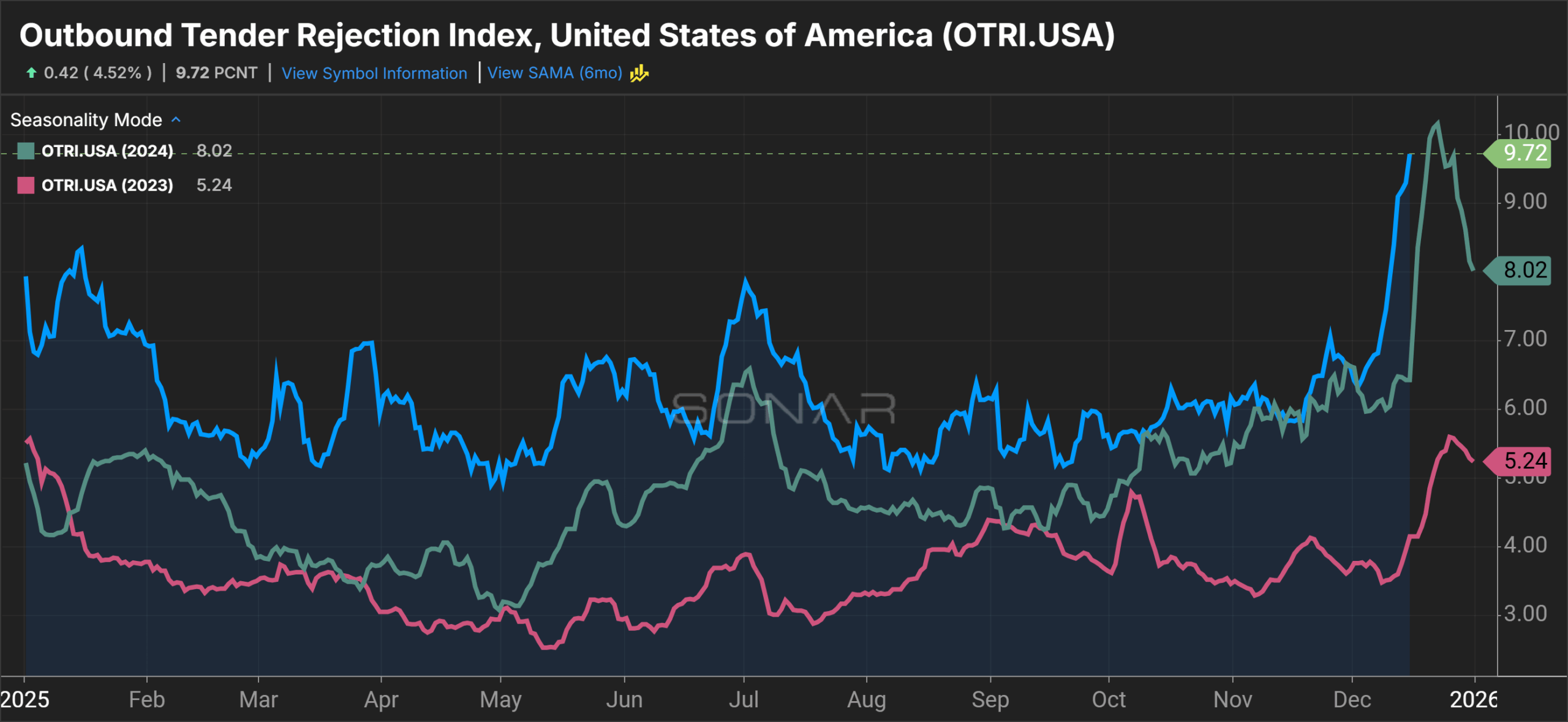
The holiday peak season has been anything but quiet. Despite weak overall demand, a stretch of seasonal bumps and winter weather events in early December sent tender rejections soaring to the highest levels since early 2022, sparking a surge of spot activity in turn. The resulting tightness will likely continue building through year-end as winter storms move across the Midwest and Northeast and more drivers take holiday time off.
While this stretch of volatility alone is unlikely to drive a meaningful shift in macro conditions, it does make clear that the market is firmly in balance and vulnerable to sustained disruption in 2026. Exactly when that might occur depends on several variables, starting with demand.
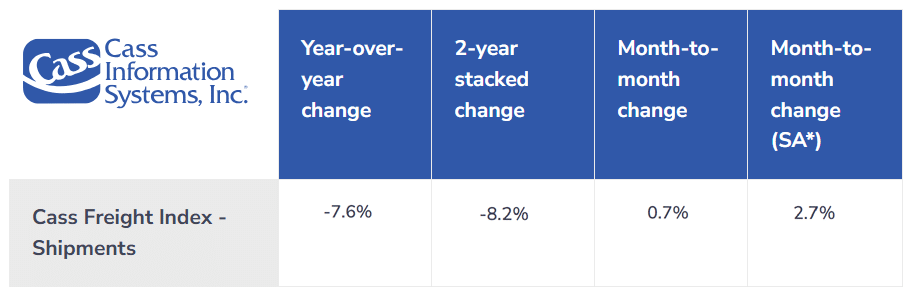
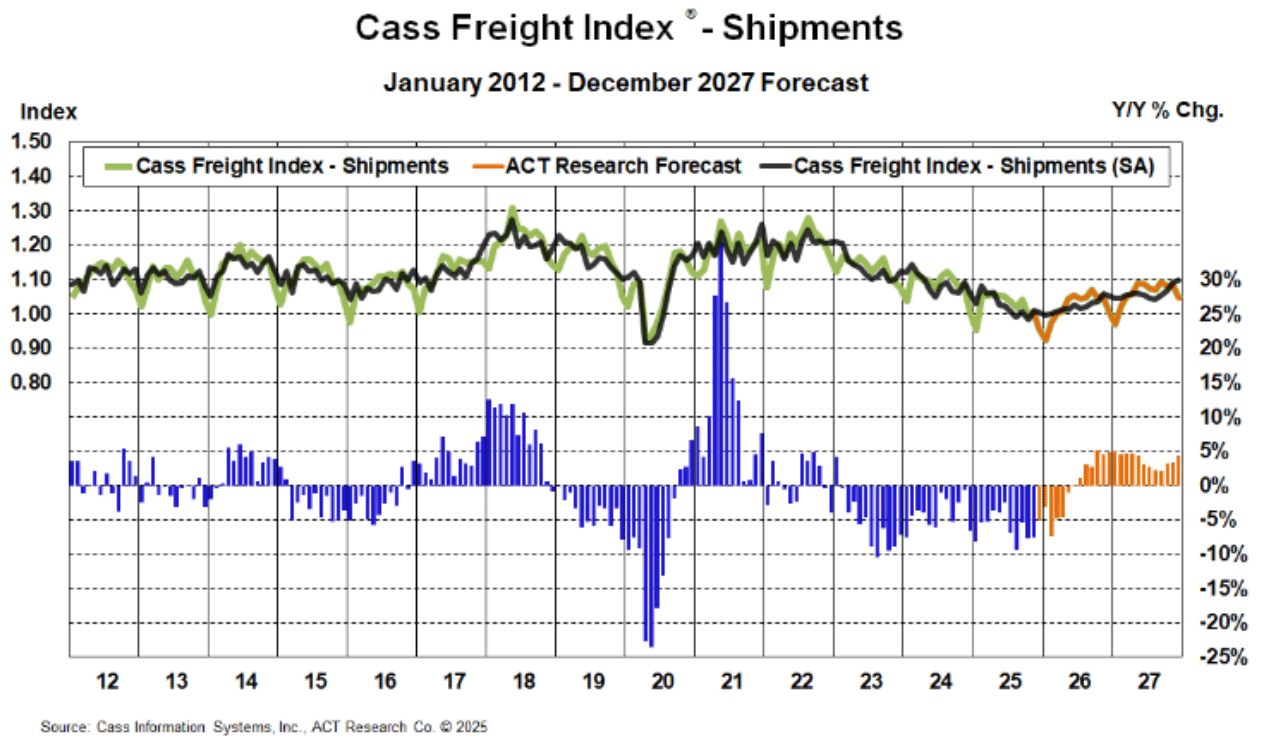
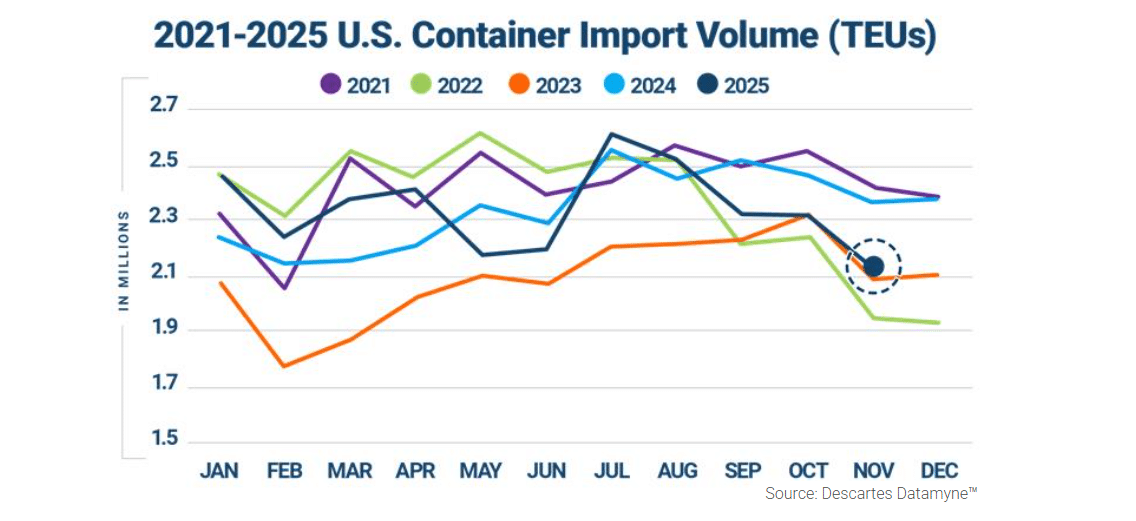
For now, volumes remain weak aside from seasonal influences and should return to pre-holiday levels once conditions normalize in mid to late January. Imports are also down more than 10% year-over-year in Q4 following the summer pull-forward boom, offering little to no near-term relief.
Looking ahead, tariff policy will be a key demand variable in 2026. Greater clarity around enforcement and progress toward a renewed North American trade agreement may help stabilize cross-border flows and spur a manufacturing recovery, but the broader implications for demand remain uncertain until tariff impacts fully work their way through the economy.
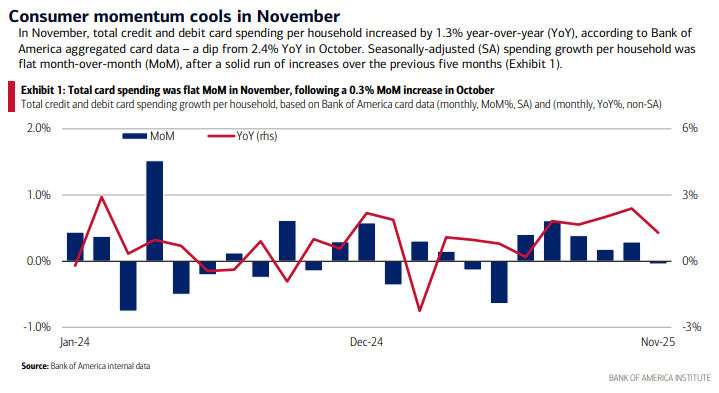
On the consumer side, the National Retail Federation expects holiday retail sales to exceed $1 trillion, meaning that spending continues despite inflation. That strength will support near-term demand, but it also carries the risk of pushing inflation higher once tariff-driven price increases reach shoppers, which could ultimately soften freight volumes. Political developments ahead of the 2026 midterms add another layer of uncertainty, with the administration floating potential stimulus measures that would temporarily boost economic activity.
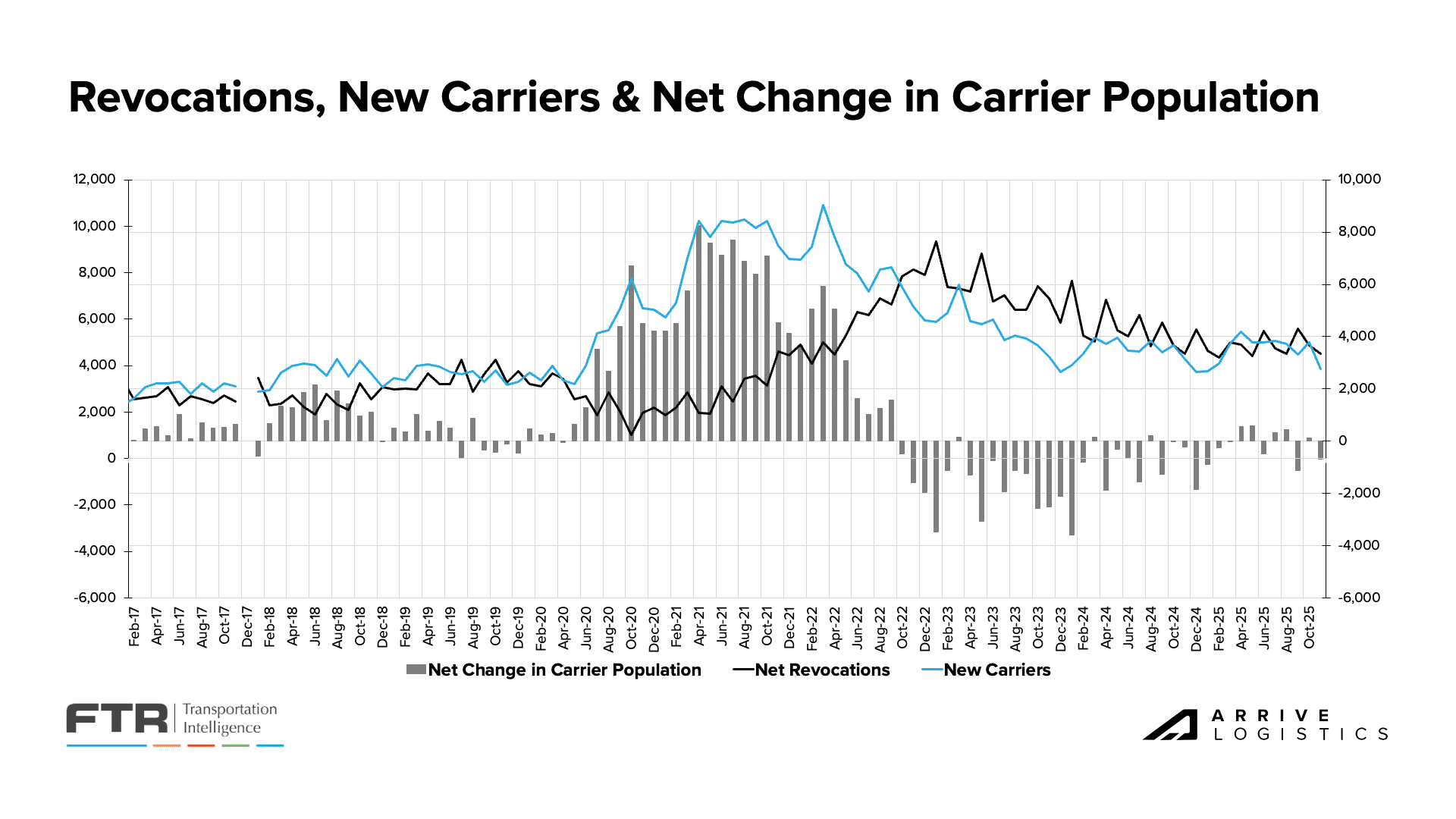
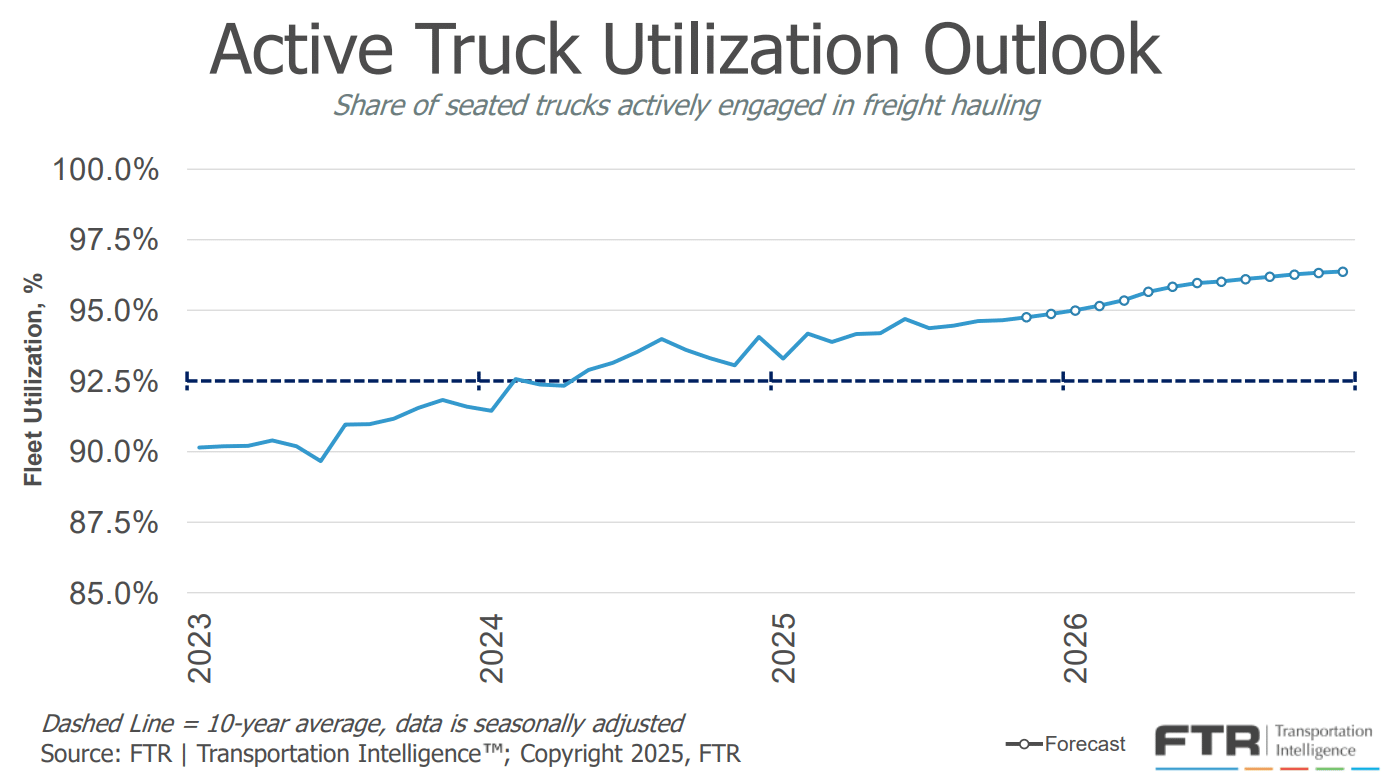
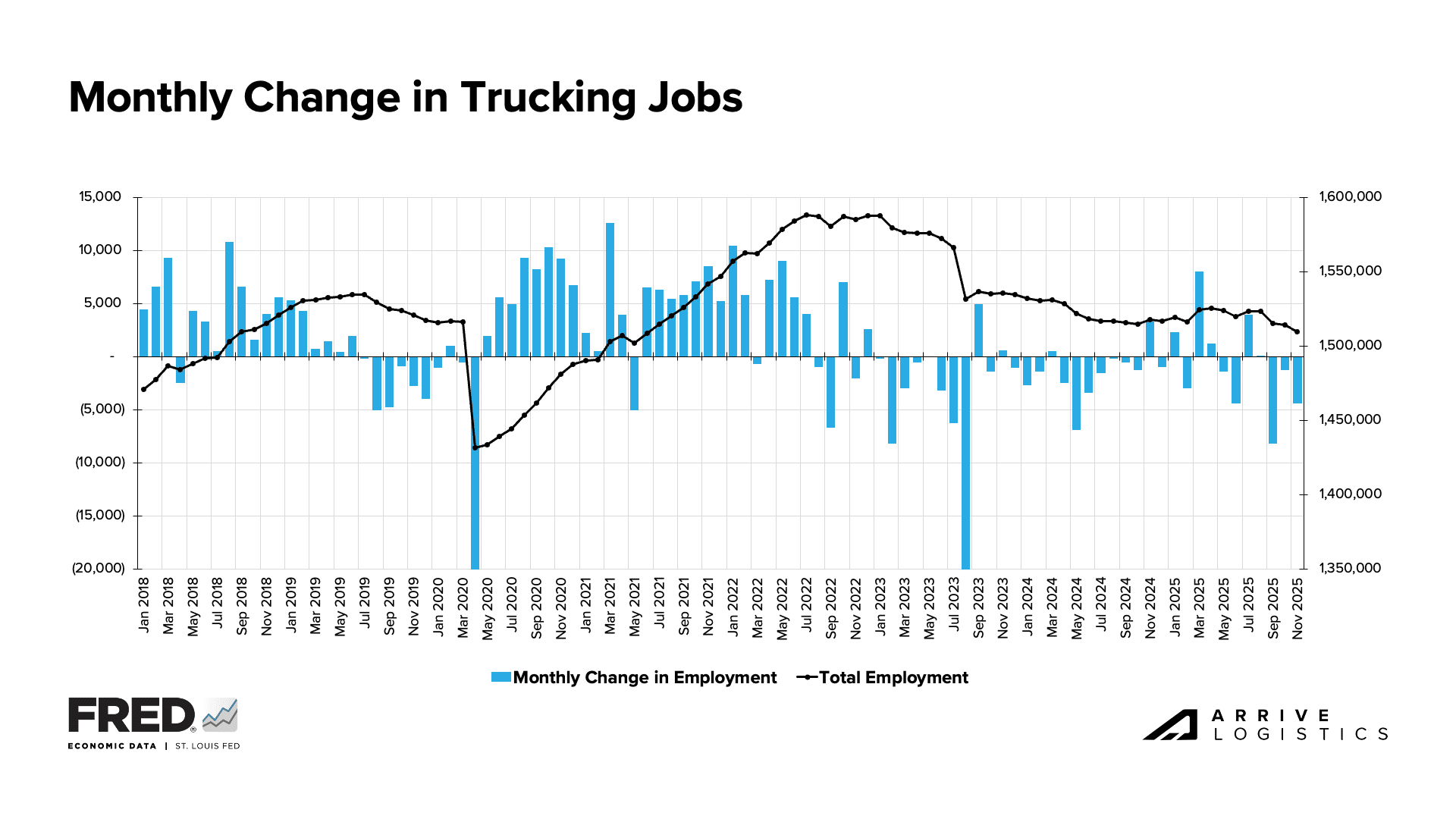
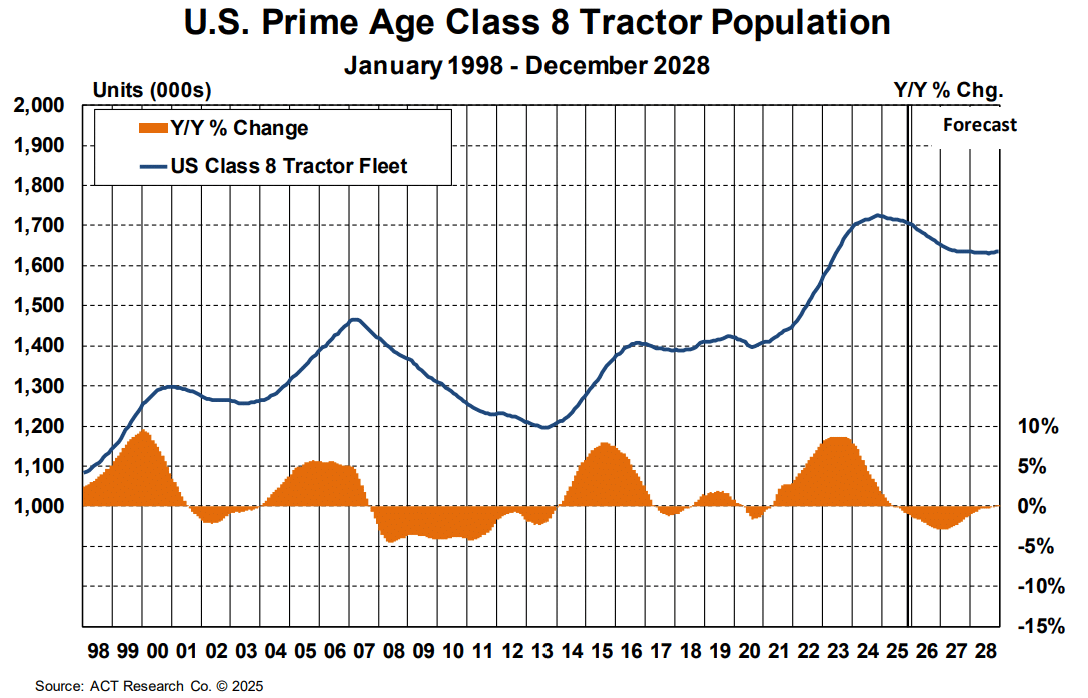
Supply also faces several meaningful risks heading into the new year. Low equipment orders persisted through November, shrinking the tractor population and limiting the market’s ability to absorb future demand shocks. Regulatory uncertainty — from the FMCSA’s non-domiciled CDL rules to sweeping driving-school audits — could also have a significant impact on capacity, depending on how enforcement plays out.
For now, expect volatility to continue well into January before conditions settle into a delayed post-holiday lull. Read on for a detailed breakdown of demand, supply, rates and economic conditions as they stand mid-month.

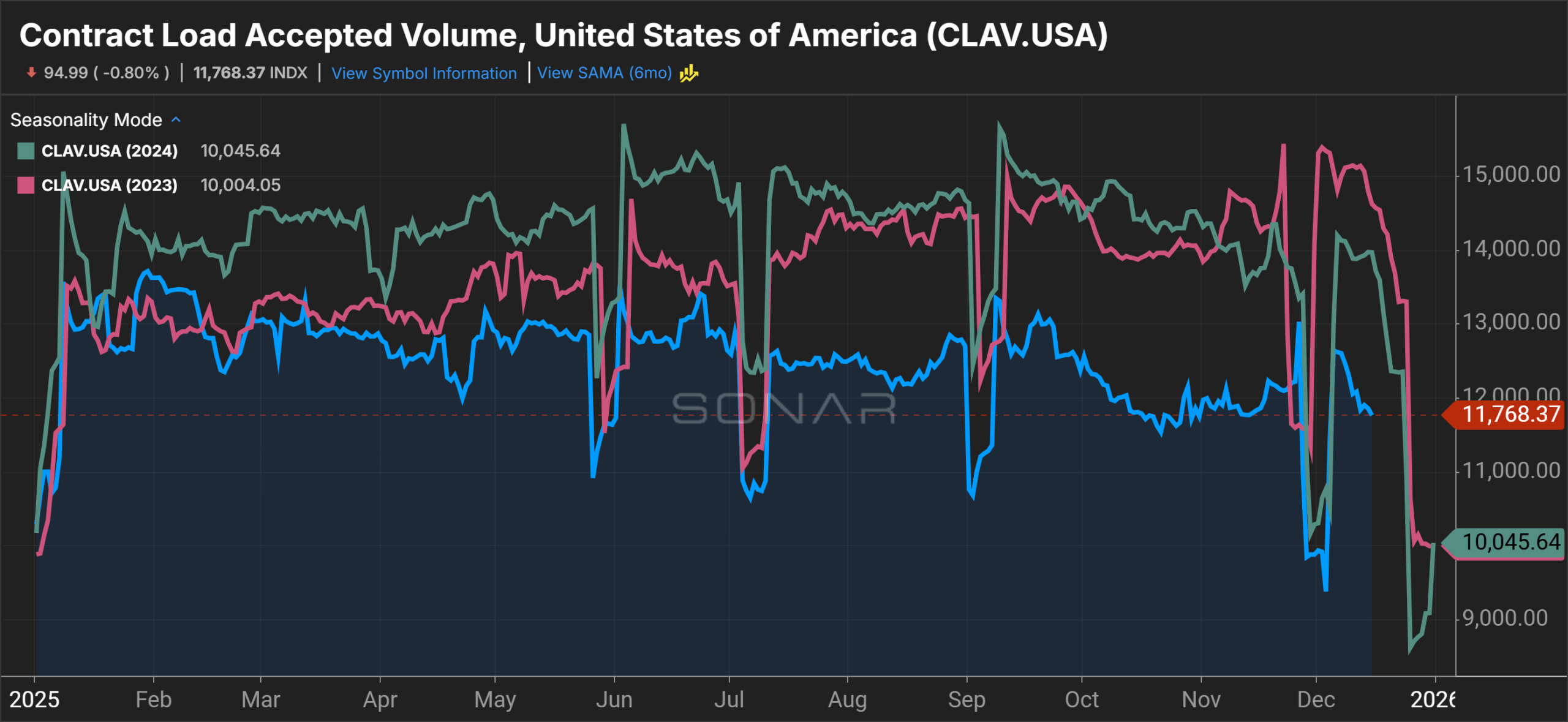
Contract volumes moved slightly higher through November, but low imports and manufacturing contraction held overall demand down. Parcel peak activity around Black Friday and Cyber Monday pulled capacity off the road, and seasonal disruptions in early December drove a sharp spike in tender rejections and spot market activity after Thanksgiving. Early bouts of snow and cold across the Midwest and Northeast caused these conditions to persist into early December, a period when a lull in tightness between holidays is common.
Outside of seasonal disruptions, demand will likely remain soft through year-end. Trade policy will be the key trend to watch as 2026 begins, especially if restocking efforts begin in late Q1. A potential USMCA renewal could firm up North American trade early in the year, and more certainty around tariff policy could jump-start business investment and related demand.


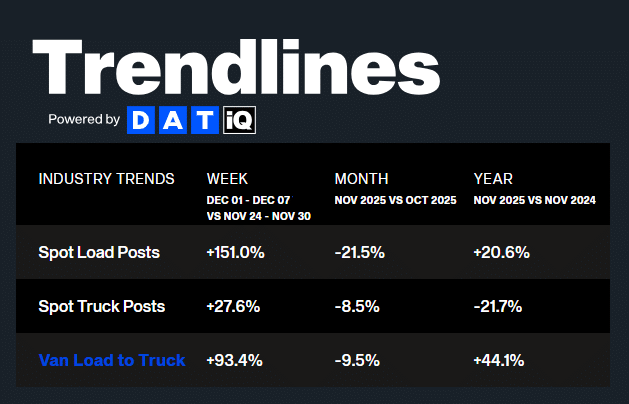
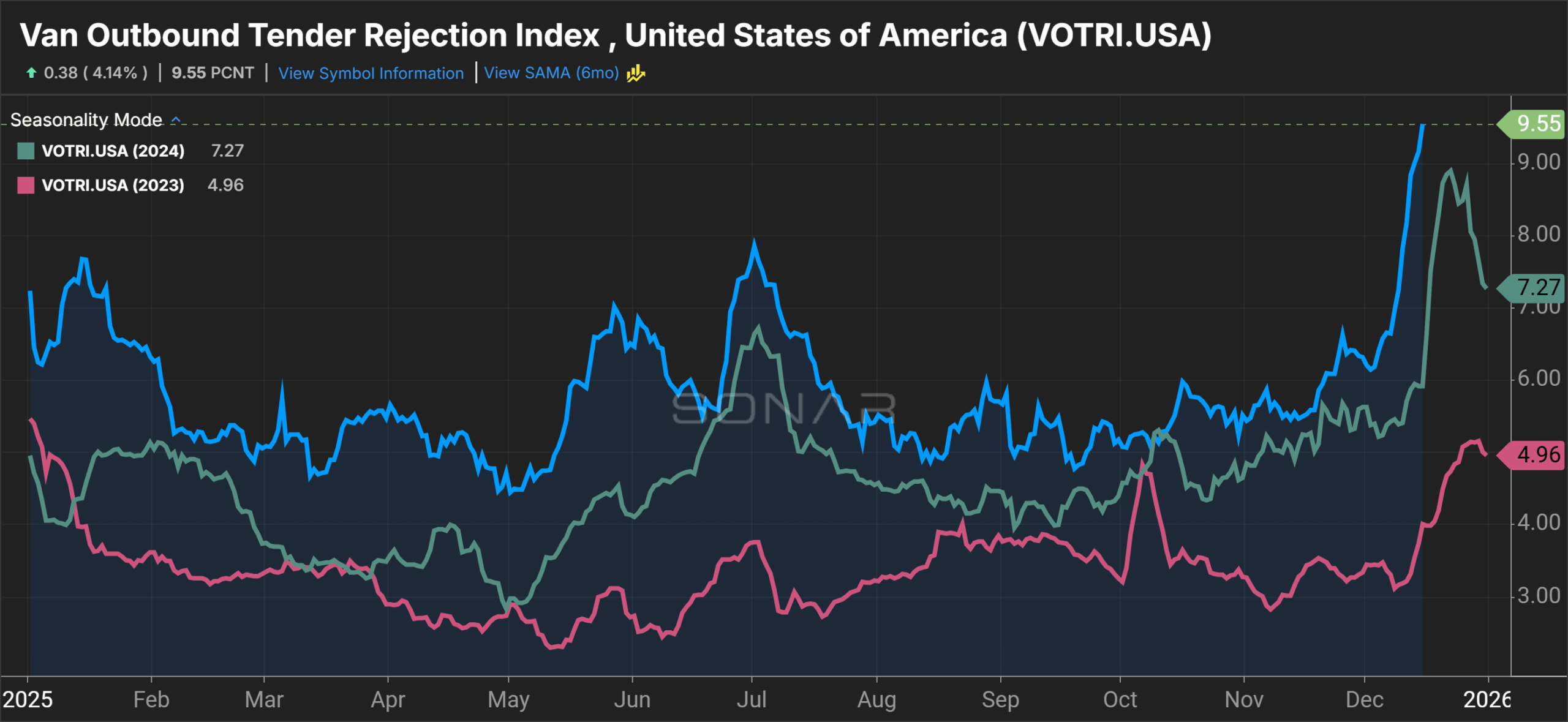
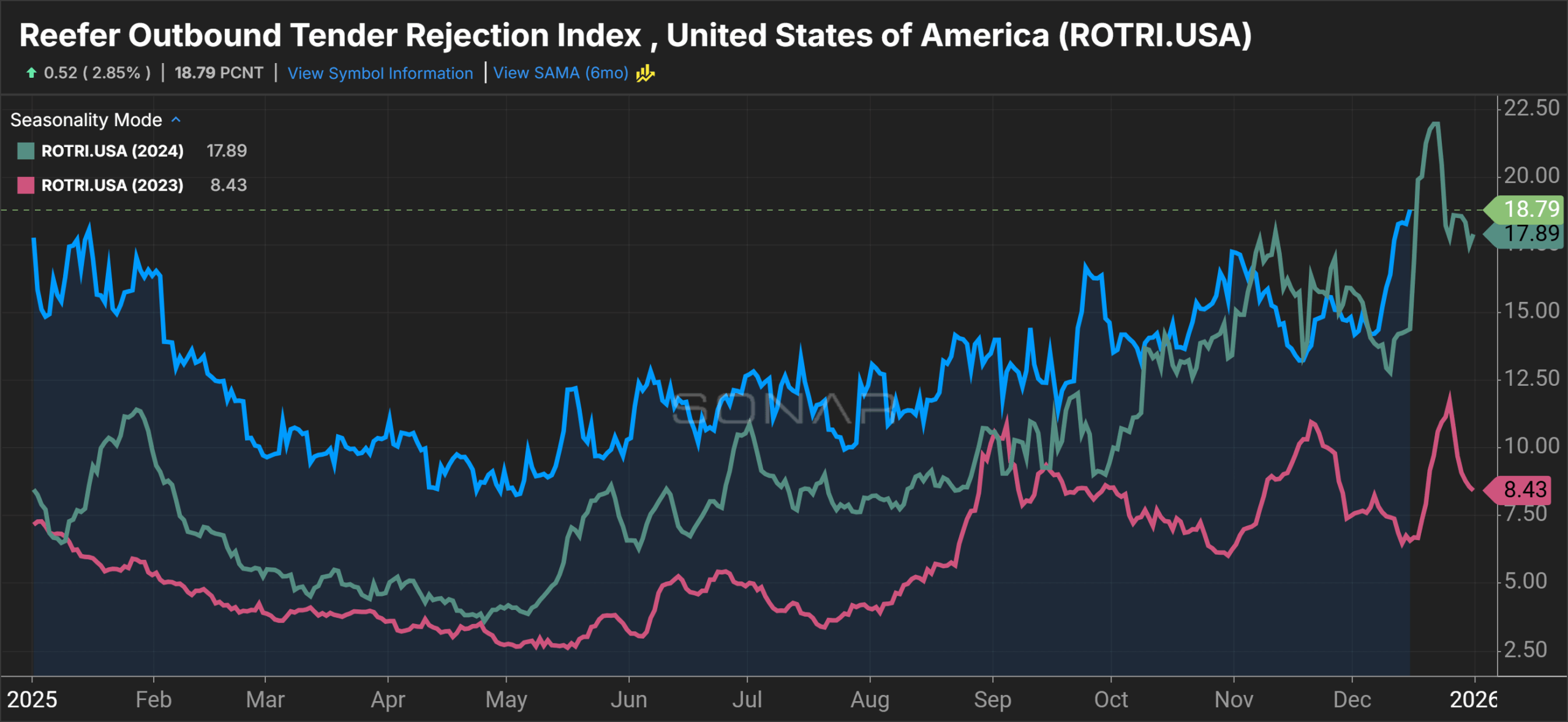
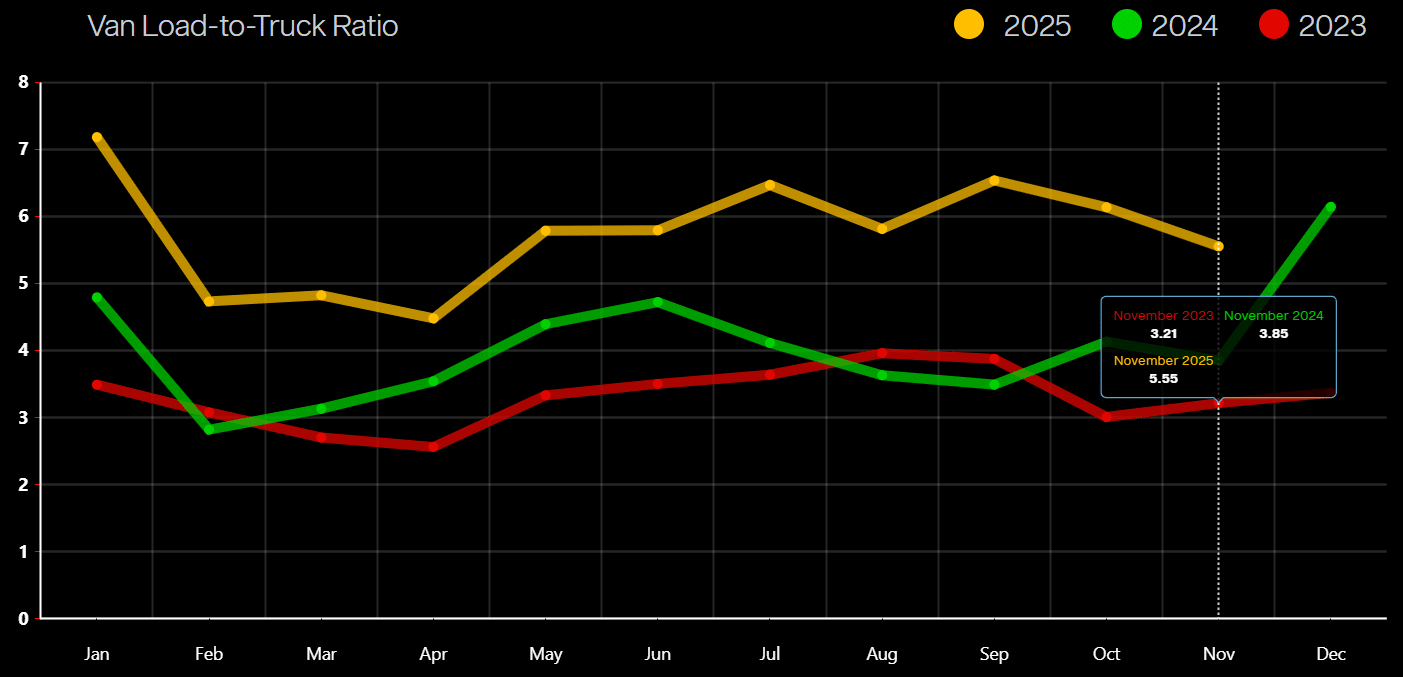
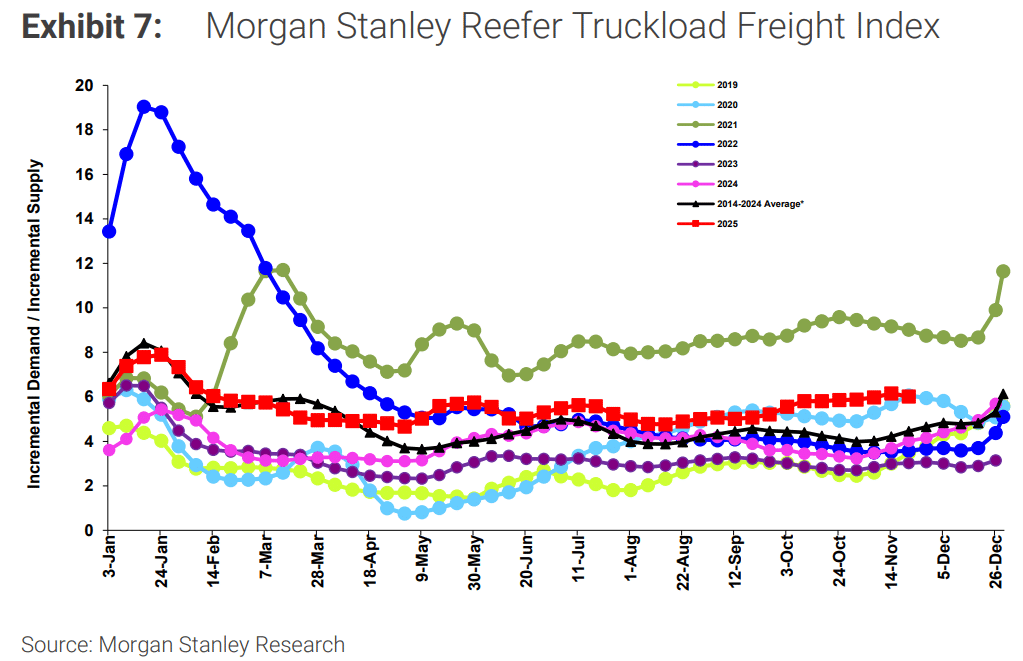
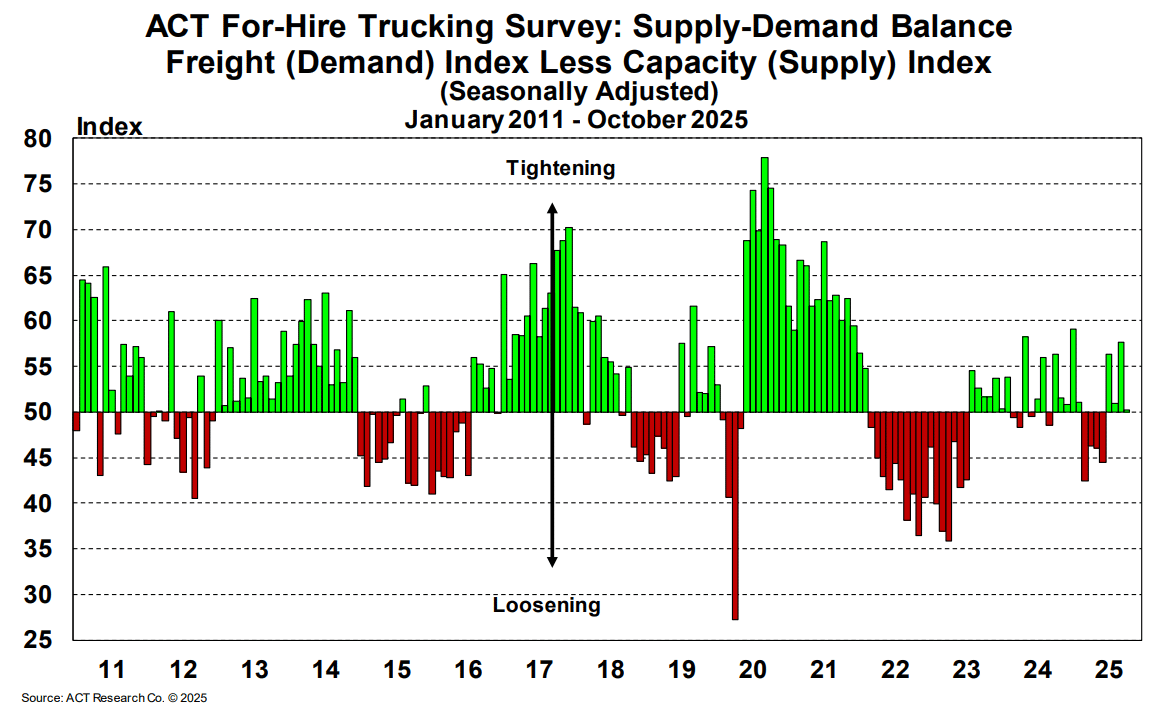
Reefer and van load-to-truck ratios and tender rejections moved higher as freeze-protect and holiday food demand increased around Thanksgiving. Low equipment orders also continued through the month.
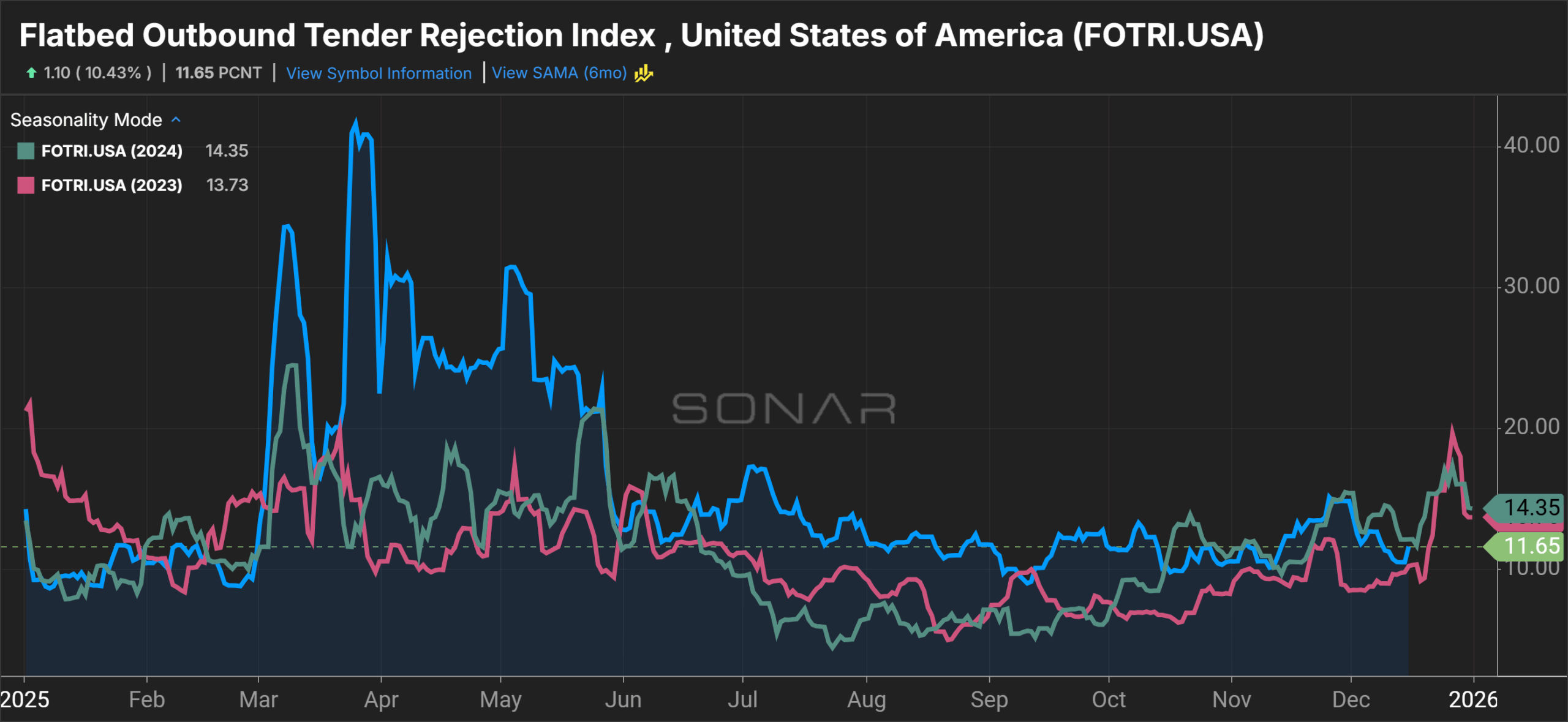
As of mid-December, SONAR tender rejection data shows the highest levels of non-compliance in shipper routing guides since early 2022, signaling the tightest capacity conditions in more than three years. This trend is likely to persist through year-end due to winter weather, driver time off and holiday demand. As 2026 begins, driver exits, low equipment orders and ongoing regulatory uncertainty could leave the supply environment increasingly fragile.


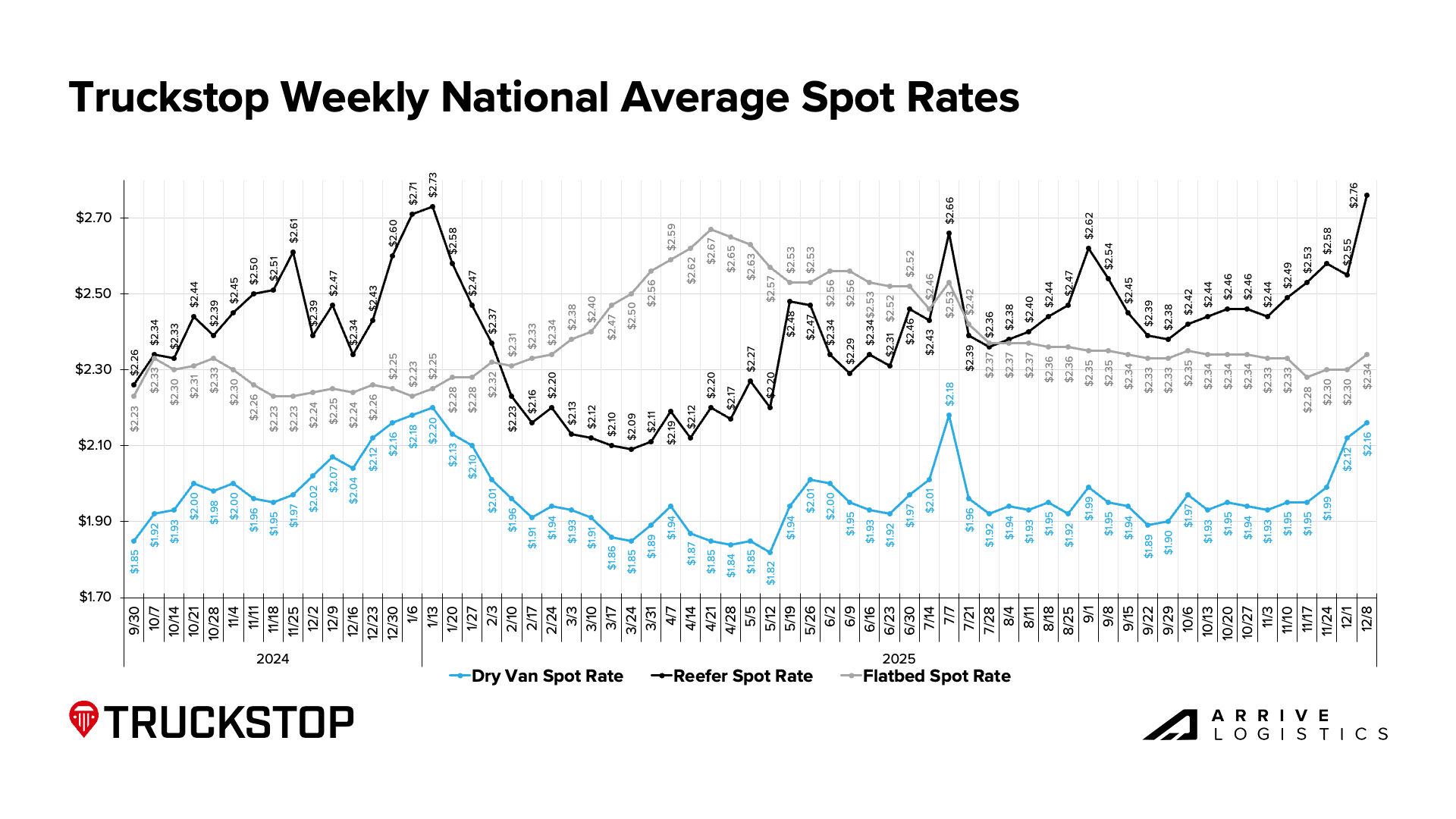
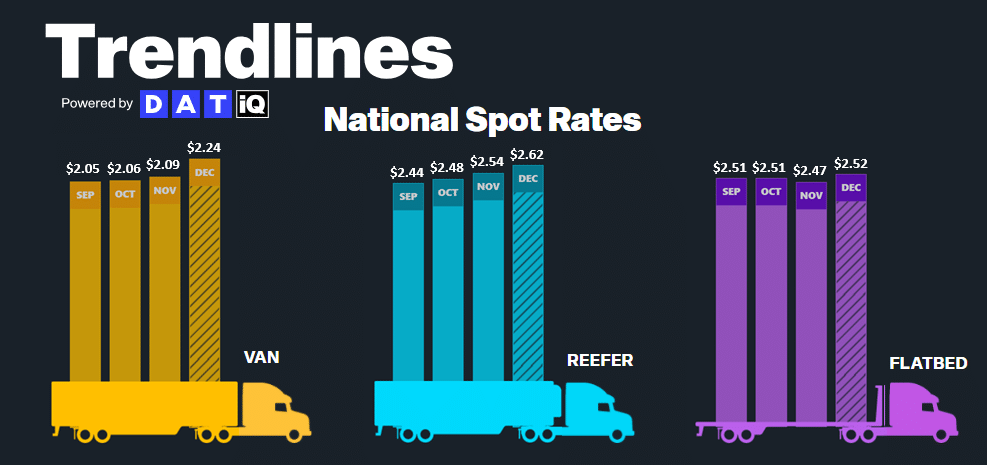
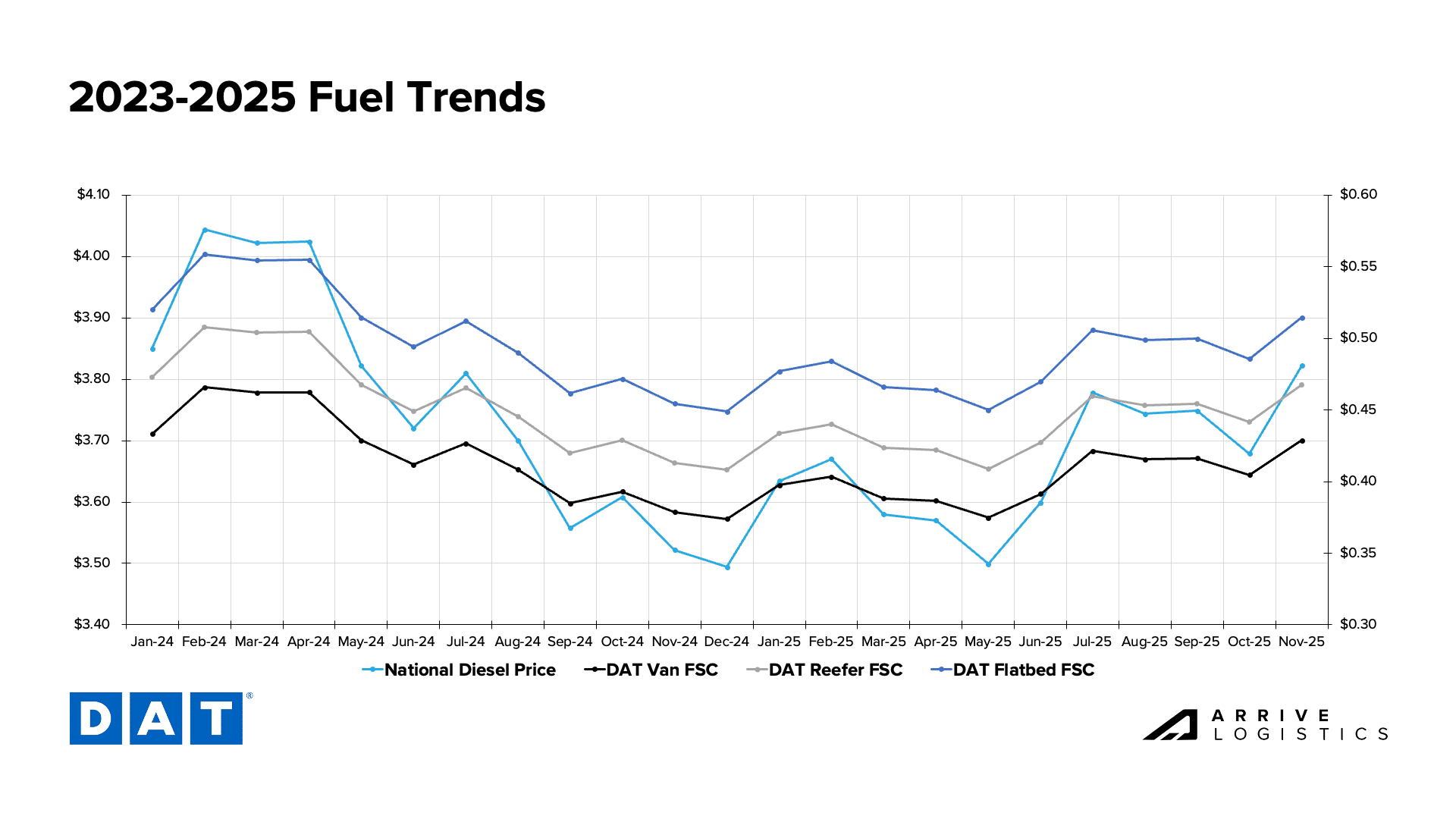
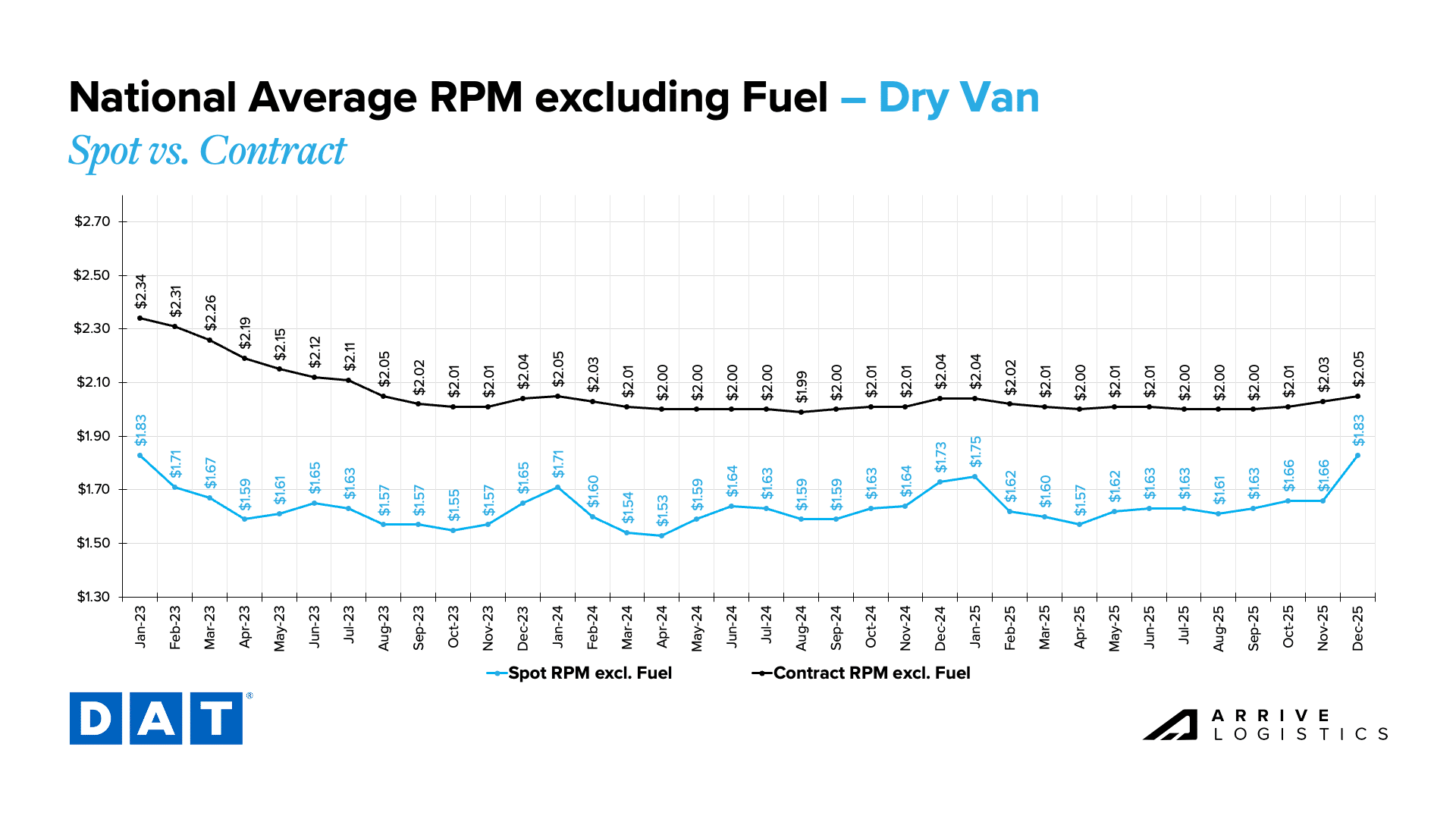
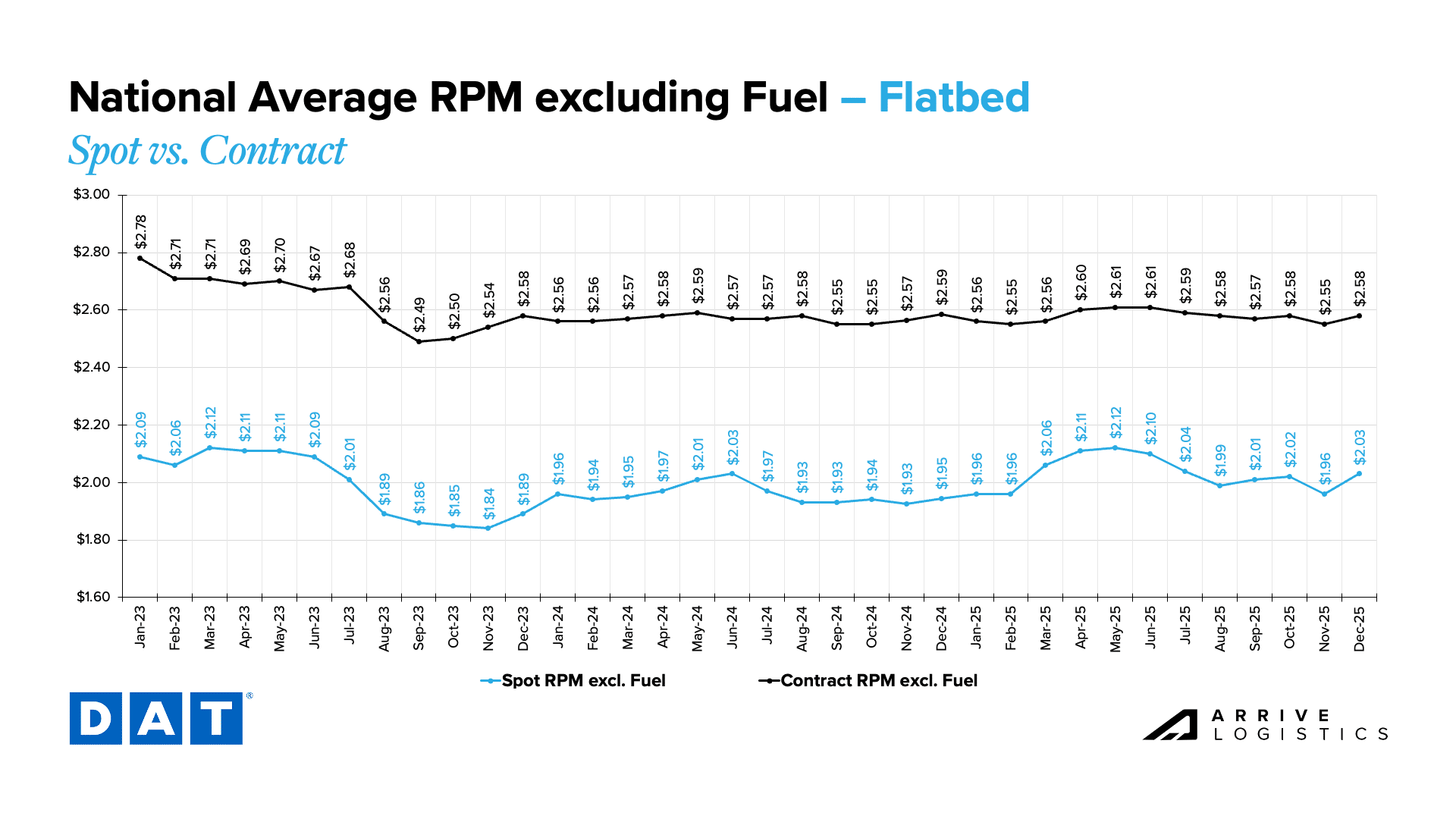
Spot rates climbed quickly as tender rejections soared in early December, driven by winter weather, seasonal demand and holiday-related drivers taking time off. The spot–contract rate gap also tightened to cycle lows as disruption intensified.
Rates are expected to follow typical seasonal patterns through year-end, with volatility driven by weather and seasonal demand spikes. Beyond the holidays, rates are likely to settle back to an elevated floor, but a meaningful recovery remains unlikely until volumes make a sustained rebound.


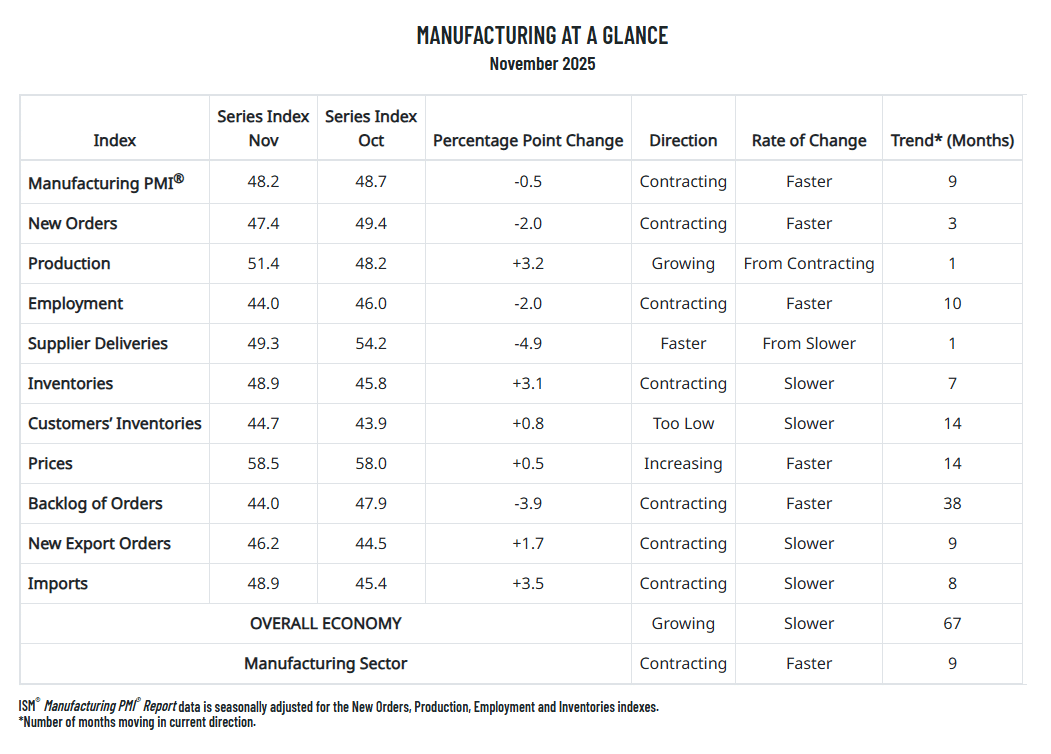
Manufacturing remained under pressure through November, with new orders and overall PMI weakening and a large share of manufacturing GDP in strong contraction. Warehouse utilization also declined for the first time in the Logistics Managers Index history as front-loaded inventories were reduced rather than replenished.
A manufacturing recovery will depend on how business investment responds to trade developments. Inventory replenishment could drive demand in Q1, but tariff-related cost pressure at the shipper level risks pushing inflation higher and weighing on consumer demand. Tariffs, inflation and the upcoming midterm elections all remain risks heading into 2026.

Get this free report delivered straight to your inbox every month.