"*" indicates required fields
Winter Storm Fern slammed much of the country just as freight market conditions began to settle in mid-January, causing major disruptions that sent tender rejections higher and pushed spot rates to multi-year highs through month-end. That volatility stretched into early February as more snow and frigid temperatures hit the Southeast, Carolinas, Mid-Atlantic and parts of the Northeast.
Similar storms in recent years did not generate nearly this level of volatility, particularly in February, when demand typically softens and weather-related disruptions subside relatively quickly. While the worst of the storm’s impact has now passed, it’s clear the market is rapidly approaching a tipping point.
As of mid-month, spot rates across van, reefer and flatbed remain meaningfully elevated on a year-over-year basis, with some still sitting at or above contract levels. Even with volumes down year-over-year, supply is showing significant cracks as high operating costs, ongoing trucking employment declines and regulatory enforcement continue to reduce the driver count and shrink available capacity.
Looking ahead, spot rates will likely ease as the dust continues to settle in the coming weeks. However, even with a steeper-than-expected decline, they will enter the second quarter up significantly on a year-over-year basis. The longer spot rates remain elevated, the higher the floor for the year is set ahead of periods of increased seasonal demand.
In turn, pressure on contract rates will increase and routing guide challenges will become more common as the year progresses. This trend will likely first materialize when produce season ramps up in March, and how the market responds will offer insight into what to expect during the stretch from DOT Week in May through the peak summer shipping season in June and July.
If the last few months are any indication, shippers should prepare for some of the most volatile conditions in several years. While this is unlikely to match the scale of disruption seen during the pandemic, a sustained period of spot rate inflation should now be expected, along with the challenges that typically accompany those environments.
For more data and insights on the key trends to watch as this transition unfolds, read on.
Tender rejections and spot market activity surged as Winter Storm Fern struck in late January, while contract volumes remained down year-over-year, reflecting persistently soft demand outside seasonal disruption. Imports declined year-over-year, but steady ordering helped keep levels above historical averages for the month. Manufacturing returned to expansion for the first time in nearly a year as the share of the sector in contraction fell significantly from December. Consumer spending also showed continued strength.
Demand will likely level out through late Q1 before building again ahead of produce season and the summer months. The recent improvement in manufacturing is notable, particularly given how broad the contraction was in December. However, a similar one-month expansion last year was followed by renewed contraction, making it too early to determine whether this shift indicates the start of a sustained recovery.


Winter Storm Fern drove sharp increases in tender rejections and spot market activity at a time when market conditions typically begin to soften. Recent trucking employment data showed a significant downward revision, indicating that at least some portion of the ongoing disruption is tied to increased sensitivity from significant capacity reductions over the past few years. Outside seasonal disruptions, high operating costs and increased regulatory enforcement continued to constrain capacity early in 2026.
Capacity conditions should continue to ease in the near term as volatility and spot demand subsides. However, given the market’s response to this latest disruption and the aforementioned risks, supply pressure could increase again as early as the spring produce season.


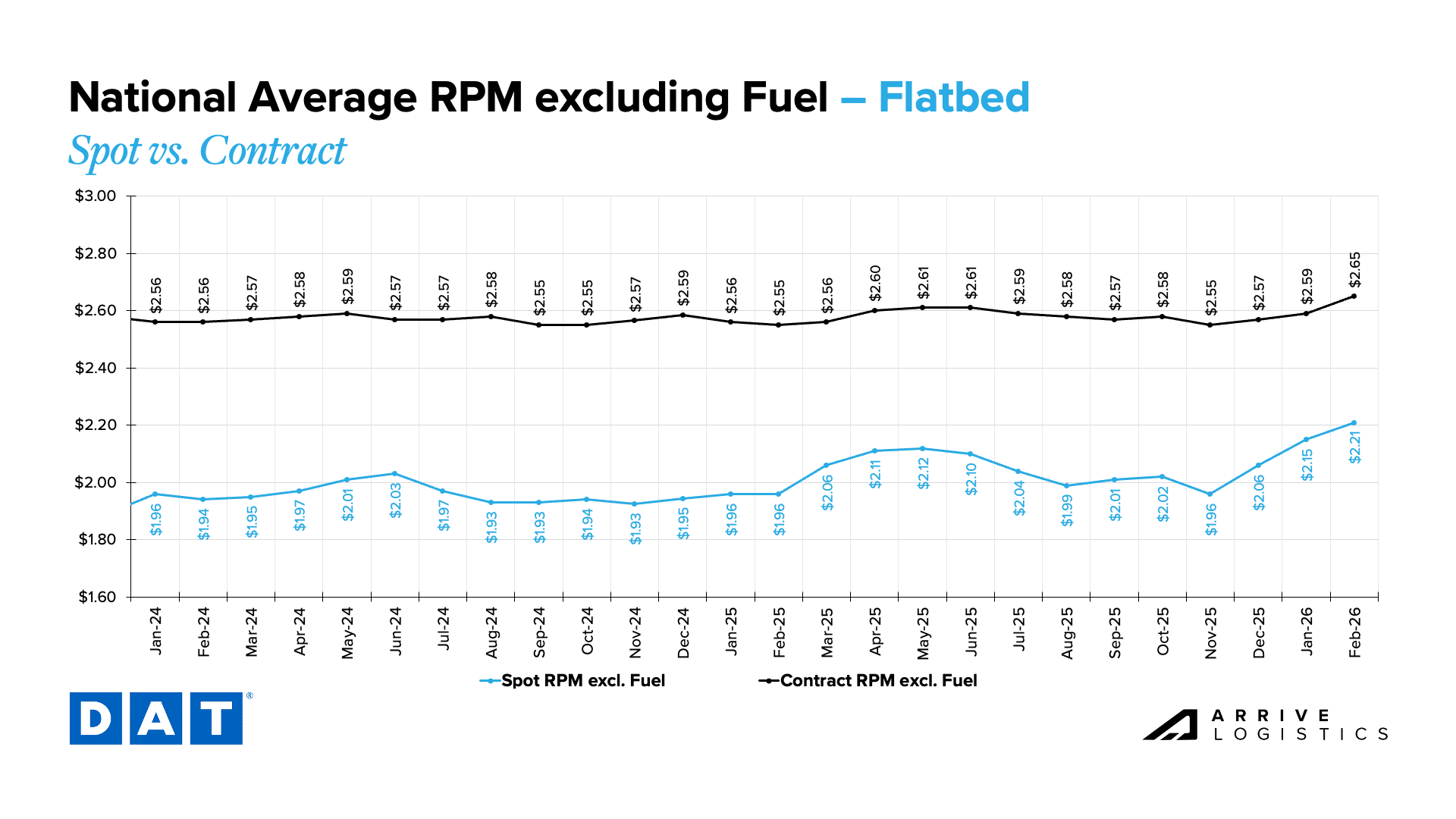
Van, reefer and flatbed spot rates rose sharply in late January as Winter Storm Fern set in. The rally carried into February, and while indicators suggest it may now be leveling off, spot rates remain meaningfully elevated year-over-year. The spot-contract gap has narrowed considerably across modes, with the van spread down to just a few cents and reefer above contract rates, signaling growing pressure on contract pricing.
Even with a steep near-term decline, spot pricing will likely continue to post double-digit growth above 2025 levels through the remainder of 2026. Persistently elevated rates at this point in the year will set a higher floor moving forward, so as seasonal demand builds through the spring and summer, added tightness will push spot rates higher and increase pressure on contract pricing.


Manufacturing expanded in January, signaling a shift in business investment, particularly related to data centers. On the consumer side, spending remained resilient beyond the holiday season, growing modestly year-over-year. Labor market growth exceeded expectations, supporting continued spending in the near term.
While housing-related demand remains a drag on freight volumes, increases in manufacturing could support growth, especially against weak comps in the back half of the year. The ruling on tariffs means some short term potential for increased import activity, however uncertainty with the use of other tariff strategies could mean additional challenges down the road. Lagging inflation remains the key downside risk for freight demand, while consumer strength, interest rate cuts and potential government stimulus ahead of the midterm elections present additional upside risks.


After winter storms wreaked havoc on the Canadian market in January, backlogged freight demand continued to consume outbound capacity and drive a surge in spot demand that pushed Canada-to-U.S. rates higher. Inbound Canadian capacity has normalized as outbound volumes remain high, but tightening U.S. conditions are also pushing northbound rates higher. Seasonal driver time off further constrained supply on lanes in both directions.
Tighter inbound conditions are expected to return as weather-related disruptions fade. In the wake of the tariff ruling, a potential surge in cross-border activity is likely, particularly on southbound lanes, as importers rush to move products ahead of potential new tariff measures. However, elevated trade tensions with the U.S. could continue to limit exports from Canada in the longer term. Capacity will remain tight through winter’s end, while continued regulatory enforcement affecting drivers and driver pools will likely reduce supply further and push rates higher as the year progresses.

Get this free report delivered straight to your inbox every month.